



GymnAdemics

Unleash Your Child’s Skills!

Our programs nurture early childhood development through movement and play. We provide a safe environment that fosters growth and confidence.

Private, Exclusive and Personal

Personal Approach

We take a personal approach by pairing each child with trained, professional educators who understand their unique needs.

Earning Trust Through Quality

We uphold the principles of openness, collaboration, and commitment to maintaining parents’ trust by continuously improving and ensuring the quality of our stimulation programs.

Quality Over Quantity

We prioritize quality over quantity, which is why student intake is limited to ensure strong, meaningful connections between teachers and students.
Physical Program

Physical activity is essential for supporting children’s play, learning, socialization, and building self-confidence. Consistent training of fine and gross motor skills, along with sensory stimulation, helps develop movement skills, body balance, and coordination. This foundation is crucial for enhancing children’s cognitive abilities, as they engage in physical activities daily for 45 to 60 minutes, tailored to their developmental needs.

Gross Motor Skills

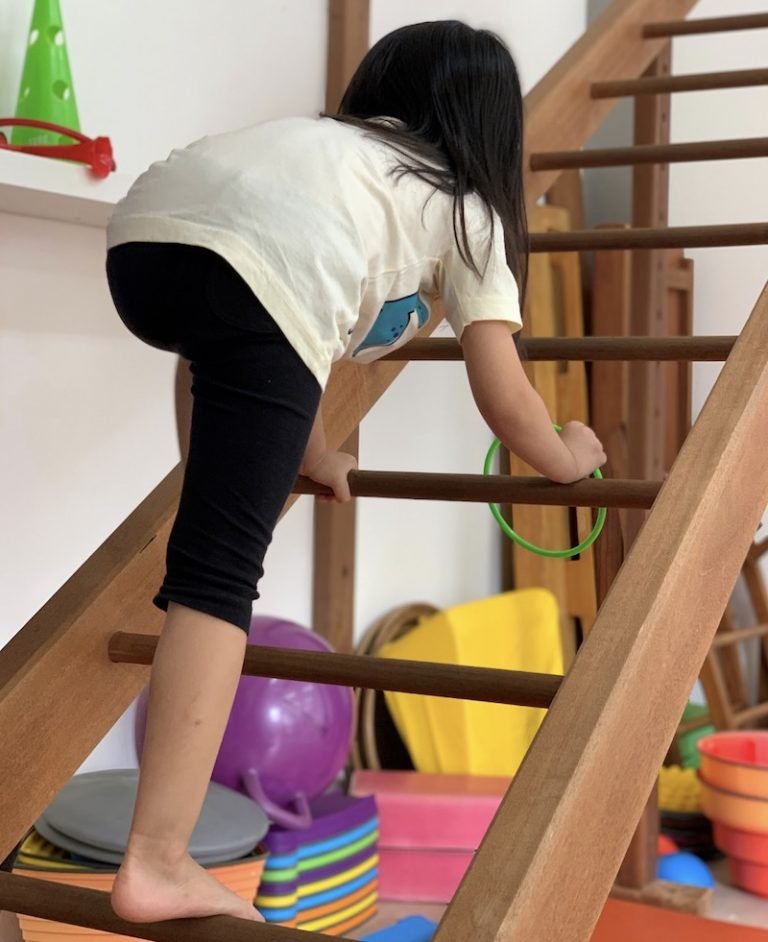
Engaging in fun physical activities designed to stimulate gross motor skills is beneficial for providing adequate vestibular and proprioceptive input. This helps children develop movement skills, body balance, and coordination.

Static balance, dynamic balance! Physical activities we provide to help your child master balancing during development encourage physical activity that boosts endurance, strength, and movement confidence as they navigate the world. 

Balance is a cornerstone of children’s physical development, supporting better coordination, posture, and overall fitness. Balance also helps kids with spatial awareness, motor control, and the ability to perform everyday tasks easily. Furthermore, good balance is also linked to improved concentration because it strengthens the body’s connection to the brain. 

If your child is struggling with age-appropriate balance activities our team can help!

Manual competence refers to the ability to use your hands and body effectively and skillfully to perform tasks and activities. The development of manual competence in young children is extremely important for their future independence and educational skills. That’s why we promote regular exercises, games, and engaging the child in everyday activities to help develop manual skills and improve children’s attention.

Fine motor skill development allows your child to use the little muscles in their hands and fingers to pick up and handle small objects. It also involves learning to use both hands at the same time to perform manual tasks. 

Fun fine-motor stimulations are created with core goals of manipulation, bilateral coordination, eye-hand coordination, precision pinch and release, and skilled dexterity. Each hand needs to develop these skills separately as well as to use both hands together. Each finger must acquire the ability to move in isolation as needed for playing the piano, versus as a whole as if the fingers were bound to each other in a mitten. Eventually, one hand becomes the primary or dominant hand while the other becomes a functional and ready assist.  All those fine motor skills will emerge in a predictable sequence if no neurological, cognitive, or sensory issues exist and if opportunities abound!

Sensory Program

The sensory systems of humans serve as gateways for information processed by the brain, enabling appropriate responses. To ensure accurate reactions, infants and children must experience various stimuli through sight, sound, touch, taste, and smell, along with well-integrated vestibular and proprioceptive systems. These stimuli are essential components of sensory stimulation programs.

Touch, Smell, & Taste Program

If all we have known is the taste of processed food, will the taste of nature inspire us or bring us revulsion in its apparent blandness?

Let our child see and hear! Then touch, smell, and taste what nature has given to us. When these senses are developed, we have depth, understanding, relatedness, awareness, and a sense of our environment. It’s necessary for our child to explore and learn about their environment, which helps them throughout life.

However, sensory development doesn’t happen naturally. We have to actively engage with the children for them to learn how to interact with the world around them effectively.

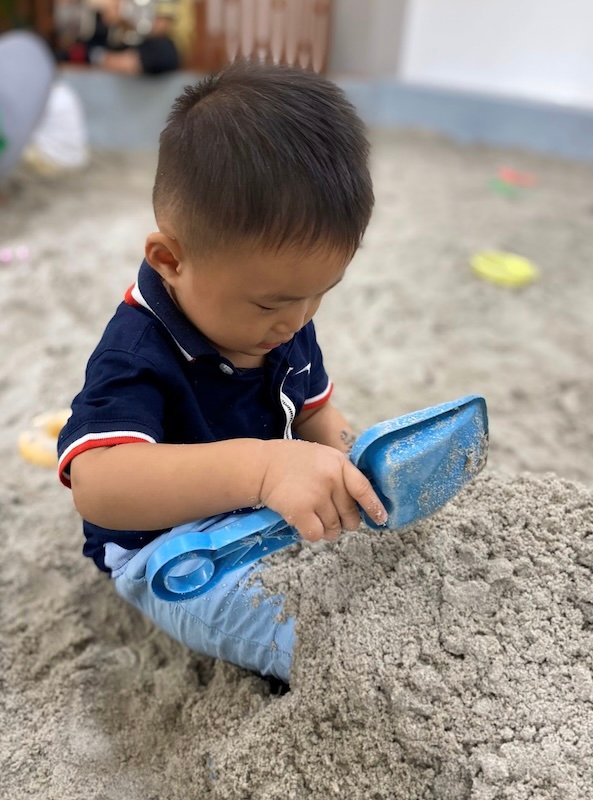
Tactile sensory play is powerful, not only to develop physical and fine motor skills in children, develop mathematical concepts and communicate, but also to support children through emotional difficulties they might experience when facing limitations.

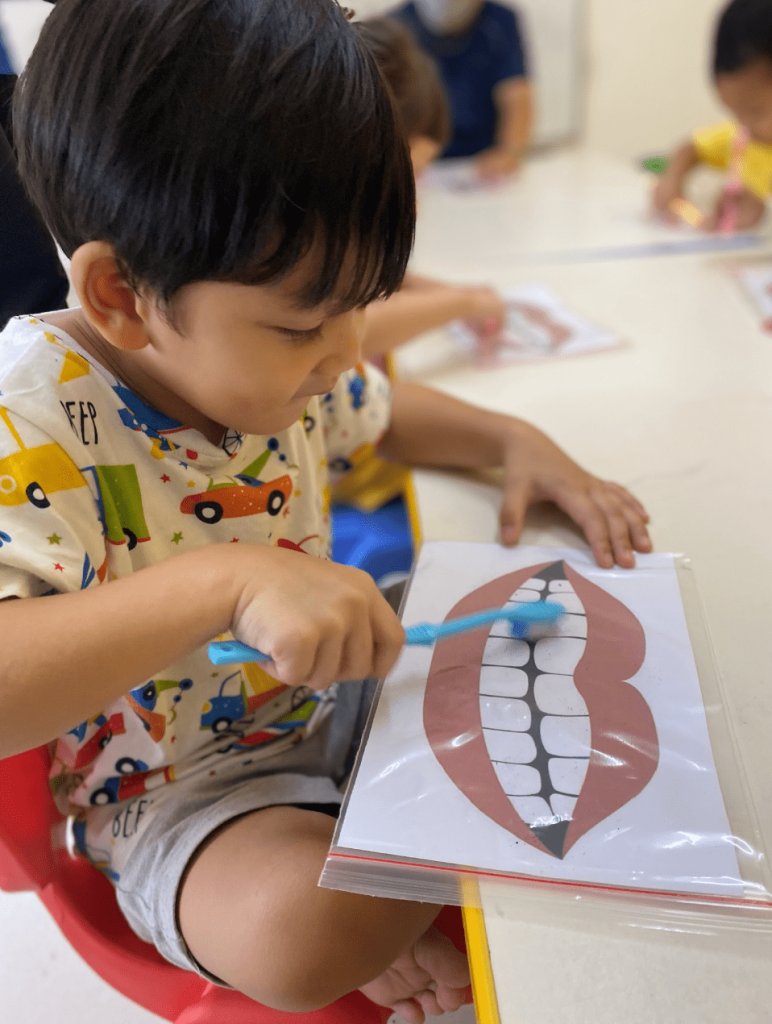
At GymnAdemics Indonesia, we gently encourage children to explore and follow their curiosity with different materials. This exploration supports children to playfully test their likes and dislikes. With the right support from adults and the environment around them, we give children the tools to interact with tactile sensory play, develop the confidence to explore more challenging textures, and use their creativity and problem-solving skills.

Intellectual Program

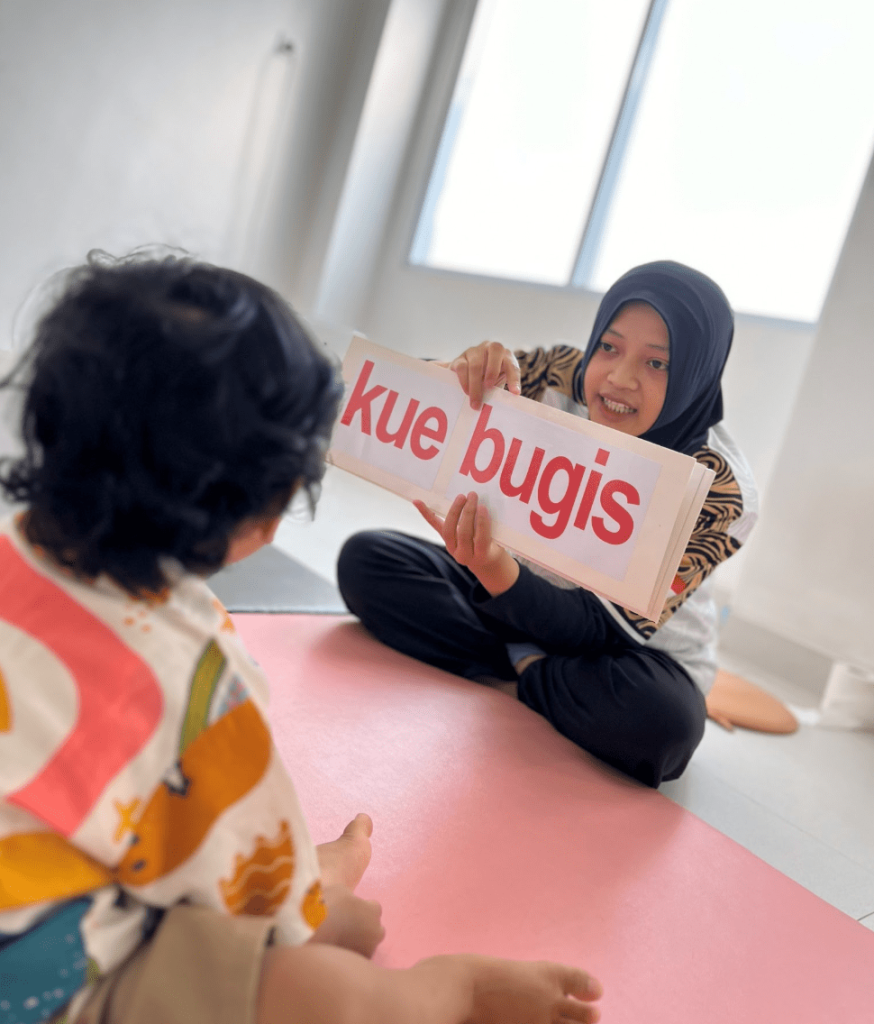
The program introduces children to words using flashcards, tailored to their stages. It serves as a tool for visual and auditory stimulation while familiarizing them with letters and reading. Children have a thirst for knowledge about their surroundings, making it crucial to provide clear information. Through engaging images, they explore their environment, fostering curiosity, language skills, and critical thinking.

Reading Program

Our reading program is adapted from Glenn Doman’s method, which has a unique approach to early reading stimulation. This approach focuses on visuo-semantic recognition rather than traditional reading instruction. Early exposure to language is believed to not only nurture reading skills but also significantly enhance memory and other higher cognitive abilities. We show flashcards to help children discover words in a simple and enjoyable way.

Children are constantly learning from everything their environment has to offer. Through picture cards, we promote a structured visual approach to early learning, highlighting the importance of early exposure to a broad range of information.

We focus on developing foundational math skills through play and hands-on activities to enable a child’s later academic attainment to reflect their creative, critical, and analytical skills.

We also believe that providing a solid mathematical foundation in early childhood increases students’ engagement in future mathematics courses, develops children’s mathematical thinking, and broadens children’s understanding of how to improve their strategies for using math knowledge to solve problems.

We are introducing children to the natural world through observation, exploration, and hands-on activities to encourage their curiosity and develop foundational skills like making observations and drawing conclusions.

In today’s rapidly changing world, logical thinking is essential for children to adapt to new situations, navigate complex challenges, and thrive in the future because it empowers children to navigate challenges, solve problems creatively, and make informed decisions. The opportunity given through the activities encourages children to explore different possibilities and think outside the box, helps children articulate their ideas and arguments clearly and persuasively. Having the skill also makes it easier for children to grasp new concepts and learn more efficiently.

Strong problem-solving skills provide a solid foundation for future learning and academic success. Children who can effectively solve problems are better equipped to tackle complex tasks and challenges in school and beyond.

We believe by empowering children to think for themselves and make informed decisions, they will learn to gather information, evaluate options, and choose the best course of action which fosters cognitive flexibility, critical thinking, and resilience.

Problem-solving can also help children develop emotional intelligence. By working through challenges, they learn to manage their emotions and understand the emotions of others.

Social-Emotional & Life Skills

By developing life skills early on, children are better equipped to handle the challenges and opportunities they will encounter throughout their lives. Hands-on and fun activities created to promote children’s emotional regulation, communication skills, and problem-solving skills, help them develop confidence, self-esteem, and the ability to navigate challenges in both their personal and academic lives.

Cooking Class

From developing fine motor skills to learning about healthy foods, cooking teaches valuable life skills. The hands-on approach to food we promote will help children develop a confident and healthy approach to eating throughout their lives. Thus, cooking is also a great way to boost communication and math skills, and it’s a lot of fun too!

Let’s swept the floor! Wash dishes and water the plants…

When it comes to children’s education, it’s not enough that they know how to read, write, and count. It’s also important to teach them how to do chores. Providing those activities will help children learn the importance of responsibility, build self-confidence and a strong work ethic, reinforce respect, and discover smart ways to work.

Music Appreciation

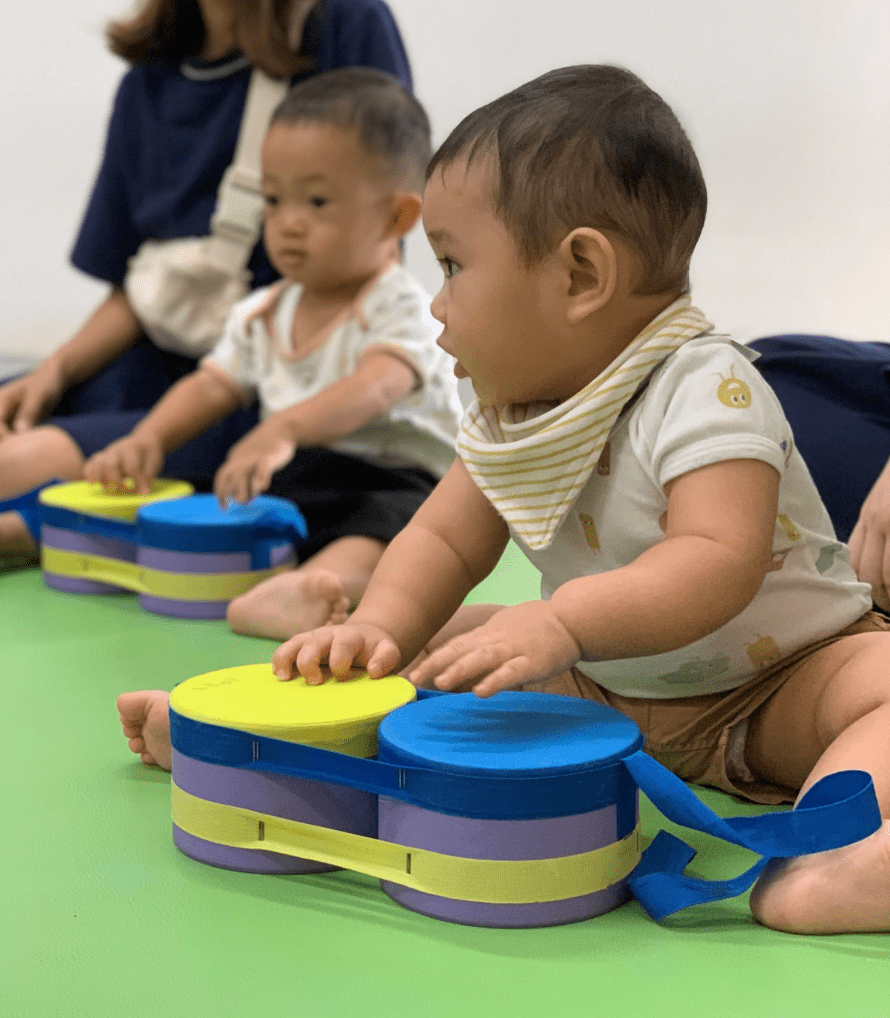
Sensorics and motoric stimulation can be more enjoyable through music. More than just a fun activity, music can help improve concentration, help develop language, mathematical and motor skills.

As children are natural musicians’ exposure to music during the early years enhances the learning process by promoting language development, creativity, coordination, and social interaction, too.

Our music program expands children’s horizons by offering a variety of music from other countries and ethnic groups. They should feel free to explore and enjoy a wide variety of musical sounds and the body movements that music evokes. Whether singing and dancing to classic nursery rhymes, or playing a makeshift drum set, early exposure to music plays a fundamental role in a child’s development.

Let’s give our children the magical way of learning through music!

Understanding Rhythm and Movement

Introducing rhythm and movement helps children connect their bodies with sound, supporting both physical coordination and cognitive growth. Through activities like clapping, stomping, or dancing to a steady beat, children learn timing, sequencing, and body awareness in a joyful and natural way. These rhythmic experiences also lay the foundation for early math, language, and social-emotional skills that encourage self-expression, focus, and group participation.

Harmony in Motion encourages children to move with purpose, blending physical activity with musical flow. Through guided movement, children learn to synchronize their actions with rhythm and melody. This activity builds coordination, balance, and body awareness.

Musical expression allows children to communicate feelings and ideas through sound, while coordination helps them bring those expressions to life with movement. By singing, playing instruments, or moving to music, children develop timing, rhythm, and body control. These activities enhance both fine and gross motor skills, while also nurturing creativity and confidence.

TESTIMONIALS & SUCCESS STORIES

Real Parents, Real Results

See how GymnAdemics has made a difference in children’s lives

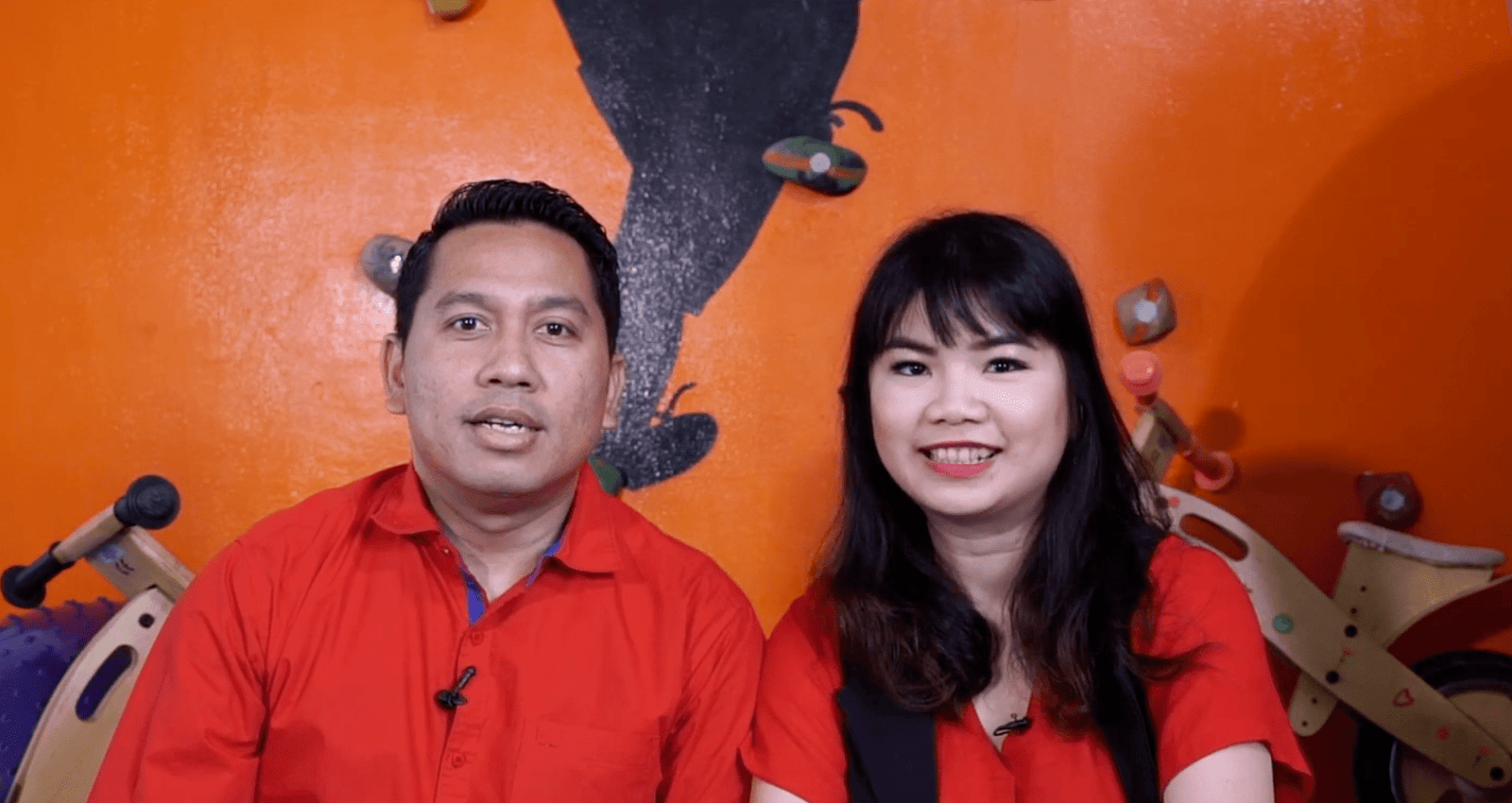
My child really enjoys GymnAdemics because every day he gets physical stimulation and brain stimulation, and we can see that because of the consistency every day, his progress is becoming more noticeable.

Andri & Catherine

Parent

Andri & Catherine

My child really enjoys GymnAdemics because every day he gets physical stimulation and brain stimulation, and we can see that because of the consistency every day, his progress is becoming more noticeable (2).

Reyhan & Dewi

Parent

Reyhan & Dewi